Category: Sea Turtles

all content related specifically to sea turtles

  • The Secret Beneath the Sand: How Sea Turtles Build Their Egg Chambers

    The Secret Beneath the Sand: How Sea Turtles Build Their Egg Chambers

    An extraordinary feat of engineering, completed with nothing but two flippers and a whole lot of determination.

    A peek inside a sea turtle’s egg chamber. Photo Credit: NOAA Fisheries/Marylou Staman

    Imagine digging a hole two feet deep in the sand. Now imagine doing it without hands, a shovel, or even the ability to see what you’re digging!

    Sounds impossible, doesn’t it? Well, for a nesting sea turtle, it’s all in a night’s work!

    Every nesting season, female sea turtles emerge from the ocean and make their way onto sandy beaches. They search for the right place to lay their precious cargo: dozens, sometimes more than a hundred eggs.

    But before a single egg is laid, that sea turtle has some serious construction work to do!

    And what happens under the sand is nothing short of amazing.

    Two Flippers. One Incredible Engineering Project.

    Once a female sea turtle finds a good nesting spot, she begins preparing the area. Using her powerful front flippers, she clears away sand and creates a body pit. A body pit is a shallow, bowl-shaped space she digs in the sand. She uses this space to settle into a comfortable position before she begins digging her egg chamber. A female sea turtle could make multiple body pits until she finds an area she feels is “just right” for her nest.

    Detailed close-up view of a sea turtle body pit. Photo Credit: Vecteezy

    Then the real work begins. With amazing care, she reaches behind her body with her two rear flippers and begins digging.

    One flipper scoops up a little sand, curls around it, and carefully drops it beside the opening. Then the other flipper takes a turn.

    Back and forth. Scoop by scoop.

    It’s almost like watching someone use two tiny shovels!

    But here’s the fascinating part: she isn’t simply digging a hole. She’s creating a carefully shaped underground chamber. The opening is narrow, but when she digs deeper, the chamber gets wider toward the bottom, making a shape similar to a bell or a vase.

    Depending on the species and the sea turtle, an egg chamber could reach two feet below the surface of the sand.

    And she does all of this without ever seeing the finished chamber!

    • Body pit: The shallow, bowl-shaped space a nesting female sea turtle makes in the sand before digging her egg chamber. She uses mostly her front flippers, but sometimes her back flippers as well, to create this.
    • Egg chamber: The deeper hole a female sea turtle carefully digs with her back flippers to hold her eggs.
    • Nest: The name for the place where a female sea turtle lays her eggs and covers them with sand to keep them safe until they hatch.
    A green sea turtle nesting. This video was recorded using a zoom lens by a citizen walking on the beach who watched from a safe and respectful distance while federally permitted university researchers conducted a morning nesting survey. Sea turtles usually nest at night, but sometimes they are still on the beach in the early morning.
    Please remember: Sea turtles are protected by law. It is illegal to disturb or harass a nesting sea turtle. Only specially trained people with the proper permits may handle sea turtles or their nests as part of authorized conservation and research work. Video Credit: Karri Lewis

    What If She Only Has One Rear Flipper?

    Here’s something that makes sea turtles even more extraordinary.

    Although sea turtles normally take turns with their rear flippers when making an egg chamber, some dig using ONLY one rear flipper! A sea turtle might lose a flipper because of an injury, a predator attack, or maybe because she was caught in fishing gear.

    Yet some of these sea turtles are amazing and can still dig nests and lay eggs with only one rear flipper. Imagine the extra effort needed to dig a carefully shaped egg chamber when you have only half your usual digging equipment!

    Not every sea turtle with a missing flipper can successfully dig a nest on her own, though. Sometimes, specially trained conservation volunteers or staff who have permission to work with sea turtles may be there to help. But the fact that some sea turtles can overcome such a big challenge reminds us just how strong and amazing these animals really are!

    Too Wet? Too Dry? This Sand Just Won’t Do!

    Have you ever tried building a sandcastle with completely dry sand? It crumbles, right? Add a little water, and suddenly you can build towers, tunnels, and walls! But add too much water, and your beautiful towers might tumble into a soggy mess!

    Sea turtles have the same problem when digging their egg chambers. The sand needs to be just right. If the sand is too dry and loose, it may keep falling back into the hole as the turtle digs. This makes it hard for her to make an egg chamber that will hold its shape.

    But what if the sand is too wet? Very wet sand can also cause problems. Sea turtle eggs need oxygen to develop, and too much water in the sand can make it harder for oxygen to reach them.

    Sometimes, a sea turtle will begin digging an egg chamber but stop before finishing. She may move to another spot and try again. Some sea turtles even try several locations before finally laying their eggs!

    Scientists have discovered that things like the amount of moisture in the sand, the size of the grains of sand, and how tightly the sand is packed can all affect nesting conditions.

    An abandoned egg chamber in Melbourne Beach, FL. Video Credit: Kris Marvin

    But how does she know?

    That’s an interesting question!

    Sea turtles don’t carry moisture meters or test the sand like scientists do!

    Instead, they use their flippers to dig and move the sand. If the sand keeps falling back into the hole or makes digging too difficult, the sea turtle might give up and try somewhere else. But here’s something amazing!

    Scientists still don’t know exactly how sea turtles decide whether the sand is just right!

    They know that things like how wet or dry the sand is can affect nesting. But how a sea turtle figures out whether she’s found a good spot is still a bit of a mystery! And that’s one of the wonderful things about nature. There is always something new to discover!

    A Nursery Hidden Beneath the Beach

    Once her egg chamber is ready, the female sea turtle gets into position and begins laying her eggs. Unlike bird eggs, which have hard shells, sea turtle eggs have soft, flexible shells.

    The eggs drop gently into the chamber, sometimes one at a time and sometimes several close together. Soon, there’s a whole pile of round, white eggs that look similar to ping-pong balls resting at the bottom!

    When she’s finished laying, the sea turtle carefully uses her back flippers to cover the eggs with sand.

    Then she scatters more sand around the area to help hide her nest from hungry predators.

    Finally, after all that hard work, she heads back to the ocean.

    But Wait! Who’s Going to Take Care of Her Babies?

    Believe it or not, that sea turtle won’t be coming back!

    Instead, the warm sand becomes a safe, cozy nursery where her babies will grow inside their eggs.

    For about two months, depending on the type of sea turtle and the conditions in the nest, the tiny turtles will grow and develop. And then, one day, something extraordinary begins happening beneath the sand! They hatch and will finally begin to emerge! (But that is another blog post…)

    Not Every Hole Becomes a Nest

    Sometimes people on the beach find evidence that a sea turtle crawled out of the water during the night, only to learn that she never laid any eggs. These unsuccessful nesting attempts are often called false crawls.

    Sometimes, a sea turtle decides a nesting spot just isn’t right. Maybe the sand is too wet or too dry. Maybe something is in her way. Maybe something nearby scares or disturbs her, or she hears or smells something she doesn’t like – or maybe someone turns on a porch light! (EEK!).

    She might turn around and leave before she even starts digging. Other times, she might dig a body pit or even start digging her egg chamber before giving up and leaving (sometimes coming back to try somewhere else down the beach).

    Each nesting attempt takes a lot of effort for an animal that must haul her heavy body across land using flippers designed primarily for swimming. The next time you go to the beach, try dragging yourself across the sand using ONLY your arms and see how hard it is (don’t cheat and use your knees or feet)!

    A false crawl on Melbourne Beach, FL Photo Credit: Kris Marvin

    A Little Wonder Beneath Your Feet

    The next time you walk along a beach during sea turtle nesting season, think about what might be happening under the sand. Hidden from view could be an extraordinary little nursery, carefully built by a sea turtle who traveled hundreds, maybe thousands of miles across the ocean, climbed onto shore, and used nothing but her flippers to make a safe place for her eggs.

    No blueprints.

    No measuring tape.

    No construction equipment.

    Just instinct, adaptation, and millions of years of evolution.

    That’s a pretty incredible achievement for an animal without hands! And one more reason to remember that even the simplest-looking stretch of beach can hold something extraordinary!

    Because Everything Matters.

    Conservation Begins With Wonder™.

    References

    A Reminder: 

    Sea turtles, their eggs, and their nests are protected by law. Never dig into a nest or disturb a nesting turtle. Egg chamber photographs and videos should be obtained through authorized conservation activities.

  • The Most Important Sea Turtle You’ll Never Meet

    The Most Important Sea Turtle You’ll Never Meet

    Sea Turtle Hatchlings Begin their Journey

    Somewhere tonight, beneath a blanket of warm sand, a tiny sea turtle is waiting.

    It has never seen the ocean.

    It has never felt the warmth of the sun or the coolness of moonlight.

    It has never taken a breath of fresh air.

    For nearly two months, it has been growing inside an egg about the size of a ping-pong ball. Around it, dozens of other hatchlings are doing the same. Together, they have spent weeks developing from tiny embryos into fully formed hatchlings. Inside each egg, small flippers, tiny scales, lungs, and even a temporary egg tooth have taken shape, while more than 100 million years of evolution have equipped them with the instincts they’ll need for the journey ahead.

    When the time is right, the hatchlings begin to stir.

    Not one at a time—but together.

    As they wriggle and dig, the sand beneath them slowly collapses. Each tiny turtle helps move sand away from the others. Alone, a hatchling might never reach the surface. Together, they create what scientists often describe as a living elevator, slowly lifting the entire group upward through nearly two feet of sand.

    When they finally reach the top, they don’t always emerge immediately.

    Instead, they wait.

    For one to three days, the hatchlings remain just beneath the surface. During this quiet pause, something remarkable is still happening inside their tiny bodies. They absorb the last of the nutrient-rich yolk remaining in their yolk sacs—a built-in energy reserve that will fuel them through the most demanding days of their young lives.

    They’re also waiting for something else. The sand above them must cool.

    Emerging into the blazing heat of the day would expose them to dangerous temperatures and hungry daytime predators. So they wait patiently beneath the sand until the beach begins to cool. Then, usually under the cover of darkness—or sometimes just before dawn—they erupt from the sand in a remarkable burst of life.

    For a few magical minutes, the beach belongs to them.

    Their journey has only just begun.

    No parent is waiting.

    No one shows them the way.

    Guided by instinct, they search for the brightest, most open horizon—historically, the moonlight and starlight reflecting across the ocean. But today’s beaches often glow with porch lights, streetlights, parking lots, and hotels. Those artificial lights can confuse a hatchling’s ancient instincts, drawing it inland instead of toward the sea, where dehydration, exhaustion, vehicles, predators, and other hazards await.

    Even when they head in the right direction, danger is everywhere.

    Ghost crabs patrol the sand.

    Shorebirds watch from above.

    Fish wait just beyond the breaking waves.

    Every step—and every swim—is a race against incredible odds.

    Yet once they reach the water, they don’t stop.

    For the next day or two, hatchlings enter what’s known as the frenzy period, using powerful strokes to swim almost continuously, carrying themselves away from shore and beyond the shallow waters where predators are most abundant. It’s an exhausting sprint fueled by the remaining yolk they absorbed before leaving the nest—their first and only “packed lunch”.

    Then, almost as suddenly as they appeared, they seem to disappear.

    Scientists call this period the “lost years.” For roughly the next four to seven years, young sea turtles drift with ocean currents, often finding shelter among floating mats of sargassum seaweed. These floating nurseries provide food, protection, and a place to grow while they remain largely out of sight.

    Eventually, they leave the open ocean and settle into coastal foraging grounds. Here they spend many more years feeding, growing, and avoiding predators. Every year they survive brings them one step closer to adulthood.

    When they finally reach sexual maturity—often decades after hatching—they begin one of the most extraordinary migrations in the animal kingdom, traveling back toward the region where their lives began. Scientists are still uncovering exactly how they accomplish this remarkable feat, but Earth’s magnetic field appears to play an important role in helping them navigate across thousands of miles of open ocean.

    For females, the journey doesn’t end there.

    During a nesting season, a female may crawl ashore several times, often laying four to seven nests containing approximately 80 to 120 eggs each. Each nesting crawl demands an enormous amount of energy. She digs a body pit, carefully excavates an egg chamber with her rear flippers, lays her eggs, gently covers the nest, disguises it with sweeping movements of her flippers, and then slowly returns to the sea.

    She will repeat this remarkable process again and again throughout the nesting season.

    During that time, she eats very little, if at all, relying almost entirely on the energy reserves she built before migrating.

    When the season is over, she returns to her feeding grounds to replenish her body. Two to three years later, if conditions are right, she’ll make the incredible journey all over again.

    And somewhere beneath the sand…

    another generation begins.

    Every sea turtle you have ever admired—

    every massive loggerhead,

    every graceful green turtle,

    every hawksbill weaving through a coral reef,

    every leatherback crossing an ocean—

    began exactly this way.

    As a hatchling no bigger than the palm of your hand.

    Trying to survive its very first night.

    Not long ago, a young child asked me a question adults almost never ask.

    “Where do baby crabs sleep?”

    It wasn’t a question asked for homework.

    It wasn’t meant to impress anyone.

    It came from something much more powerful – Wonder. 

    And in case you’re wondering – it depends on the type of crab, but some tuck themselves into tiny burrows in the sand. Others hide beneath seaweed, shells, rocks, or seagrass where they’re protected from predators. Young ghost crabs dig small burrows above the high tide line. During the day, they often stay inside these cool, moist tunnels, emerging mostly at night to search for food.

    Children ask the questions many adults have forgotten to ask. Questions like:

    Do sea turtles cry? (No, but it sure looks like they do! Instead, they have specialized salt glands located behind their eyes. These remarkable glands remove excess salt from their bloodstream—salt they take in from living and feeding in the ocean. The salty fluid drains from the corners of their eyes, making it look as though they’re crying.

    It’s one of nature’s most fascinating illusions.)

    How does a baby sea turtle know where the ocean is? (Instinct tells them to look for the horizon, which should always be the brightest light, even if there is no moon.)

    Do ghost crabs only come out at night? (No, but the cooler nighttime temperatures help keep them from drying out, since they need moisture to breathe through their gills.

    Night also helps keep them safe. Many of the birds that hunt ghost crabs are asleep after dark, making it a little easier for the crabs to search for food.)

    Can sea turtles get lost? (Most of the time, no. Sea turtles are incredible navigators. Even as tiny hatchlings, they begin a journey that may take them thousands of miles across the ocean. Scientists believe they use Earth’s magnetic field like a natural map and compass, along with ocean currents and other environmental cues, to help them find their way. But artificial lights can disorient them and send them crawling away from the ocean instead of toward it. Storms, changing ocean currents, pollution, fishing gear, and habitat loss can also disrupt their journeys.)

    Questions like these may seem simple, but they’re the beginning of something extraordinary.

    Because every great scientist…

    Every conservationist…

    Every teacher…

    Every explorer…

    Every environmental advocate…

    Started as someone who simply wondered how the world worked.

    Curiosity is where learning begins. And learning is where conservation begins. The future of that tiny sea turtle doesn’t depend only on marine biologists, veterinarians, researchers, wildlife officers, or conservation organizations.

    It also depends on ordinary people making ordinary choices.

    • Turning off lights that can confuse hatchlings.
    • Keeping beaches clean, flat, and dark.
    • Leaving wildlife wild.
    • Reducing plastic pollution.
    • Protecting the places these remarkable animals call home.

    Those choices rarely begin in adulthood. They begin much earlier.

    They begin when a child discovers the joy of watching a ghost crab disappear into its burrow.

    When they gently leave a shell on the beach after learning another animal may one day call it home.

    When they ask one more question instead of walking away.

    Those small moments quietly shape the way children see the natural world.

    And eventually…

    How they choose to care for it.

    I’ve come to believe that conservation isn’t built on fear. It’s built on wonder (and connection).

    Connection begins with wonder. Wonder leads to curiosity. Curiosity inspires understanding. Understanding grows into appreciation. And appreciation becomes protection.

    That’s why I believe one of the most powerful conservation tools isn’t found in a laboratory…

    Or aboard a research vessel…

    Or in a government office.

    It’s found in a child’s imagination.

    Chances are, you’ll never meet that little sea turtle. You’ll never know whether it survives its first night. You’ll never know where the currents carry it. You’ll never know if, decades from now, it returns to the same stretch of coastline where its life began.

    But somewhere, another child is asking why turtles cry. Or where baby crabs sleep. Or how sea stars grow new arms.

    If we answer those questions with patience, honesty, and wonder, we aren’t simply teaching children about nature. We’re helping them form a lifelong connection with it—a love for our natural world and all the living things we share it with.

    And children protect what they love.

    So perhaps the most important sea turtle you’ll never meet won’t be saved by someone standing on a beach tonight. It will be saved years from now by a child who grew up asking questions.

    A child who became a scientist.

    A teacher.

    A volunteer.

    A conservation officer.

    A parent.

    Or simply someone who learned to care.

    Because every act of conservation begins long before a nesting season. Long before a beach cleanup. Long before a rescue.

    It begins the moment someone looks at the natural world and asks,

    “I wonder…”

    And somewhere tonight, beneath a blanket of warm sand, another tiny sea turtle is waiting.

    Its future may depend on someone who first fell in love with nature simply by asking…

    Why?

    Loggerhead hatching emerging from shell
  • Every Light Matters

    Every Light Matters

    “Can one light really make that much difference?”

    During sea turtle nesting season on Florida’s Space Coast, it’s a question I hear often. It’s a fair one. After all, a porch light doesn’t seem particularly powerful. But to a hatchling emerging from its nest for the first time, that single light can mean the difference between reaching the ocean and heading in the opposite direction.

    Imagine spending your entire life curled up inside an egg in complete darkness, never being exposed to light of any kind. For nearly two months, a sea turtle hatchling develops beneath the sand, hidden from the world above. Then, one night, everything changes.

    The hatchling emerges and begins one of the most important journeys of its life: the crawl to the ocean. To us, that journey may look insignificant—a few yards of sand. But for a sea turtle, it marks the beginning of a remarkable biological process that scientists are still working to fully understand.

    As hatchlings make their way toward the water, they gather information about the world around them. They detect light, sense Earth’s magnetic field, and begin building the navigation system that may one day guide them across thousands of miles of open ocean and back to their natal beach areas.

    Scientists believe specialized magnetic receptors (magnetoreceptors) help sea turtles detect Earth’s magnetic field, while light-sensitive proteins called cryptochromes, found in their eyes, may function as a biological compass. These magnetoreceptors, microscopic crystals of magnetite which is often found in the turtle’s head or sometimes in their ear duct, serve as sensors that help them imprint on the Earth’s magnetic field. The cryptochromes, tiny light sensitive proteins found in the eyes, act like a biological compass. Together these two work as a magnetic map (magnetoreceptors) and a magnetic compass (cryptochrome). It’s how sea turtles can navigate some of the longest migrations in the animal kingdom, traveling thousands of miles each year to find their way back to their natal beaches, the area where they emerged. 

    The odds are already stacked against them. Only about one in 1,000 hatchlings is expected to survive to adulthood. For thousands of years, finding the ocean was simple. The brightest light was always the horizon where the moonlight reflected off the water, and nature programmed sea turtles to move toward that light. For countless generations, the system worked exactly as intended. Then we changed the rules.

    Today, the brightest light on many beaches isn’t the moon. It’s human behavior. Maybe it’s a brightly lit condo complex. Perhaps a beachfront home with bright white porch lights. Maybe it’s a heavily lit parking lot. It could even be an oceanfront restaurant with bright outdoor table lighting. However, to a hatchling, those artificial lights can look just like the horizon, and instead of heading toward the ocean, they head inland. Some become exhausted, dying in entangled vegetation or baking in the sun. Some become the victims of predators such as coyotes, armadillos, raccoons, ghost crabs, fire ants, feral cats, or unleashed dogs, just to name a few. Others wander into roads, parking lots, or storm drains and never reach the water at all.

    Artificial lighting affects nesting females as well. A sea turtle is nearly weightless in the water, but on land every ounce of her body weight hits her like a sledgehammer. A loggerhead may weigh 300 pounds. A green sea turtle may weigh 350 pounds. A large leatherback can exceed 1,000 pounds. The next time you visit the beach, try lying down in the sand and pulling yourself forward using only your arms. You’ll quickly discover it’s much harder than it sounds! That’s what nesting sea turtles experience every time they come ashore. After laying her eggs, an exhausted nester must find her way back to the ocean. Artificial lights can cause her to wander unnecessarily inland, wasting precious energy and increasing her risk of injury or stranding. Bright lights can also deter females from nesting in the first place, causing them to abandon a nesting attempt and return to the water without laying their eggs – a behavior known as a false crawl. Flashlights, light from cellphones or smart watches, beachfront lighting, and even misdirected roadside lighting can all disrupt nesting sea turtles. 

    And light isn’t the only challenge humans create. Beach furniture left overnight can block nesting females and hatchlings. Holes dug in the sand become traps. Sandcastles become barriers. Even a footprint can look like the Grand Canyon to a hatchling no larger than the palm of your hand. Uninformed or careless beachgoers can deter nesting females as well, simply by using their cellphone on an otherwise dark, quiet beach. 

    The best thing we can do for sea turtles is to leave our beaches clean, flat, and dark. Because conservation is often the story of small things. One hatchling. One nest. One light. One hole. One sandcastle. One decision. By themselves, these things may seem insignificant. Together, they can determine whether a sea turtle survives.

    Shielding lights, filling in holes, knocking down sandcastles, removing beach equipment, and picking up litter are all simple actions. Yet each one helps restore the conditions sea turtles depended on long before we arrived.

    When we understand how sea turtles experience the world, we begin to understand something else: The choices we make matter, too. Every light matters!

    • Witherington, Blair, and Dawn Witherington. Our Sea Turtles: A Practical Guide for the Atlantic and Gulf, from Canada to Mexico. 2nd ed., Pineapple Press, 2024. 
    • Witherington, Blair, and Dawn Witherington. Florida’s Living Beaches: A Guide for the Curious Beachcomber. Pineapple Press, 2007.  
  • Sargassum & Sea Turtles: When Nature Gets Out of Balance

    Sargassum & Sea Turtles: When Nature Gets Out of Balance

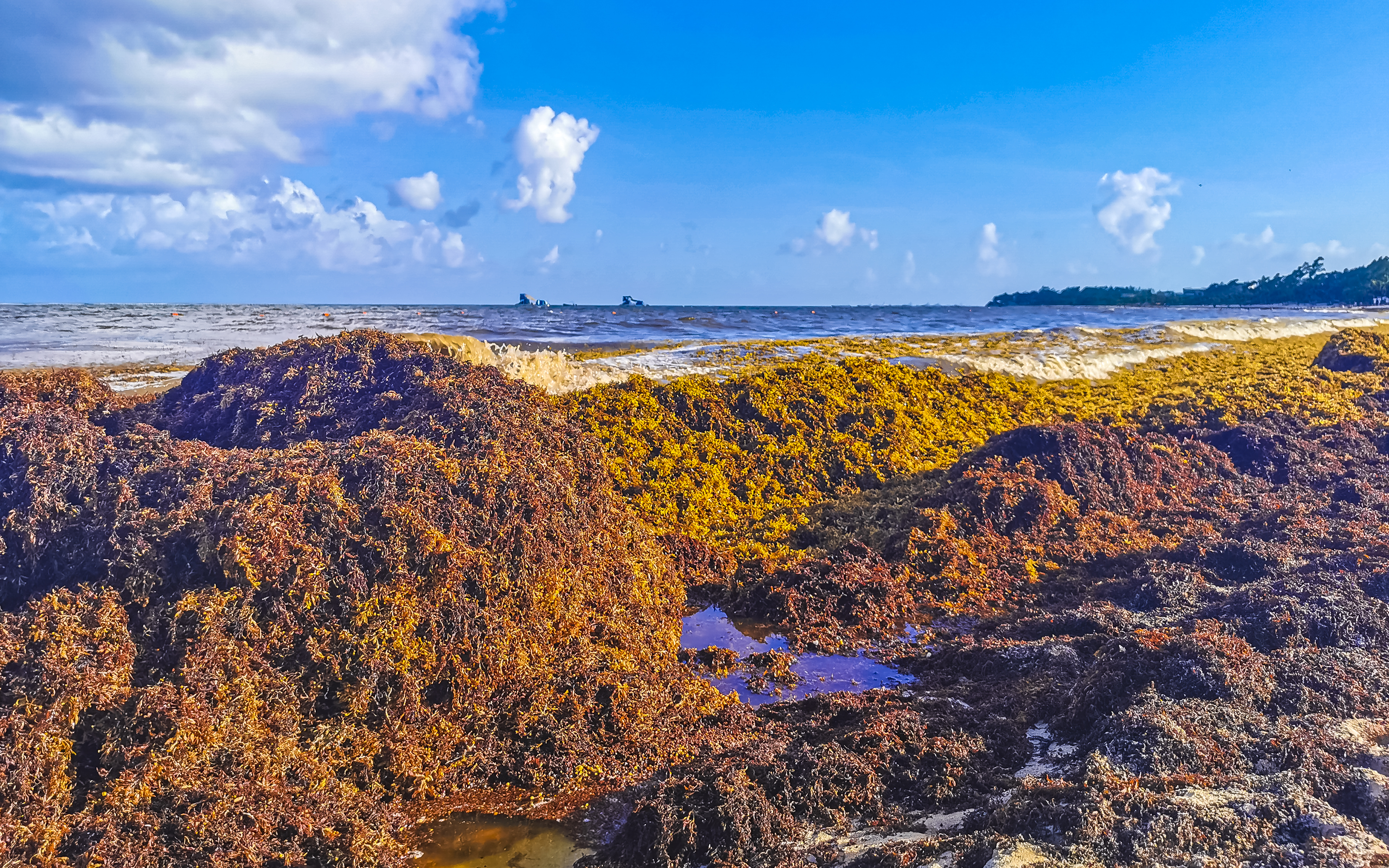
    Out in the open ocean, something magical floats just beyond the horizon. Golden-brown seaweed drifting in gentle mats. This is sargassum—“the golden rainforest of the sea.”


    A Floating Ecosystem

    Healthy sargassum is full of life. You’ll find:

    • Sargassum crabs
    • Sargassum fish
    • Juvenile eels
    • Tiny invertebrates

    We often call it seaweed, but it’s actually a brown macro-algae. In the Sargasso Sea it acts as a “nursery at sea”. It provides shelter, food, and protection—especially for young marine life. Even sea turtle hatchlings rely on it as a nursery habitat in their early ocean years.

    When Too Much Becomes a Problem

    But when unusually large amounts accumulate along nesting beaches, sargassum can create challenges for sea turtles. It can:

    • Trap hatchlings trying to reach the ocean
    • Smother nesting beaches
    • Block turtles from entering the water

    For a baby sea turtle, this can mean the difference between life and death.

    The Hidden Struggle

    Sometimes, tiny exhausted hatchlings are washed back onto shore. They should be heading out to the Sargasso Sea—their open-ocean nursery. Instead, they’re caught in chunks of Sargassum washing onto shore after storms or high winds. These baby sea turtles, known at this stage as post hatchlings are:

    • Weak
    • Disoriented
    • Out of energy

    What NOT to Do

    It’s natural to want to help. But never put a post hatchling back into the water yourself. It’s like sending an exhausted marathon runner back to the starting line.They need rest and proper care—not another immediate swim.

    What TO Do

    If you find a stranded sea turtle (of any age) never intervene yourself. 

    In Florida, call the FWC hotline: 888-404-FWCC (3922). In other states, call your local wildlife agency or marine animal stranding network.
    Trained responders can assess and care for the animal properly.

    Why This Is Happening

    Record-breaking sargassum blooms are being fueled by:

    • Warmer ocean temperatures
    • Climate shifts
    • Nutrient runoff

    This imbalance is part of a much larger environmental story.

    Why It Matters

    Sargassum isn’t the enemy. In balance, it supports life. Out of balance, it becomes a barrier. And that’s a powerful reminder: When we disrupt nature…nature responds.

  • Ghost Nets: Hidden Dangers Beneath the Waves

    Ghost Nets: Hidden Dangers Beneath the Waves

    Most people never see them. They drift silently beneath the surface—or wash ashore in tangled heaps. But for marine life, ghost nets are anything but invisible.

    What Are Ghost Nets?

    Ghost nets are lost or discarded fishing gear—often massive, heavy nets that continue “fishing” long after they’ve been abandoned.
    They don’t stop working.
    They don’t break down.
    And they don’t discriminate.

    A Tragic Reality

    During a recent dive off the coast of India, divers discovered a massive discarded trawl net—over 440 pounds—covering an artificial reef.

    Inside it…a sea turtle that had already died. Sea turtles need to surface to breathe, and when they become entangled or weighed down by ghost nets or other human-made debris, they may be unable to reach the surface for the air they need.

    Sadly, this isn’t a rare story. These nets entangle:

    • Sea turtles
    • Dolphins
    • Whales
    • Manatees
    • Fish
    • Sharks
    • Seabirds
    • And more

    Closer to Home

    Here in Florida, ghost nets and lost fishing gear continue to pose a serious threat to marine wildlife, including:

    • Loggerheads
    • Greens
    • Hawksbills
    • Leatherbacks
    • Kemp’s Ridleys
    • Manatees
    • Dolphins
    • Whales
    • Sharks
    • And more

    Strandings and entanglement injuries are reported along our coast every year.

    Why They’re So Dangerous

    Ghost nets:

    • Are extremely heavy (often hundreds of pounds)
    • Can contain hooks and sharp debris
    • Drift with currents, expanding their reach
    • Persist for years without breaking down

    The Power of People

    The good news? People are making a difference. Volunteers, divers, and conservation groups work tirelessly to remove these hazards from our oceans and beaches—often under difficult and dangerous conditions.

    Restoration in Action

    Many organizations are helping:

    • Coral Restoration Foundation
    • Mote Marine Laboratory
    • Florida Fish and Wildlife Conservation Commission

    These groups, and more, are actively working to restore reefs and protect marine ecosystems.

    What You Can Do

    • Dispose of fishing gear properly
    • Participate in beach cleanups
    • Support conservation organizations
    • Share awareness

    Because the problem may be big—but so is our ability to make change.