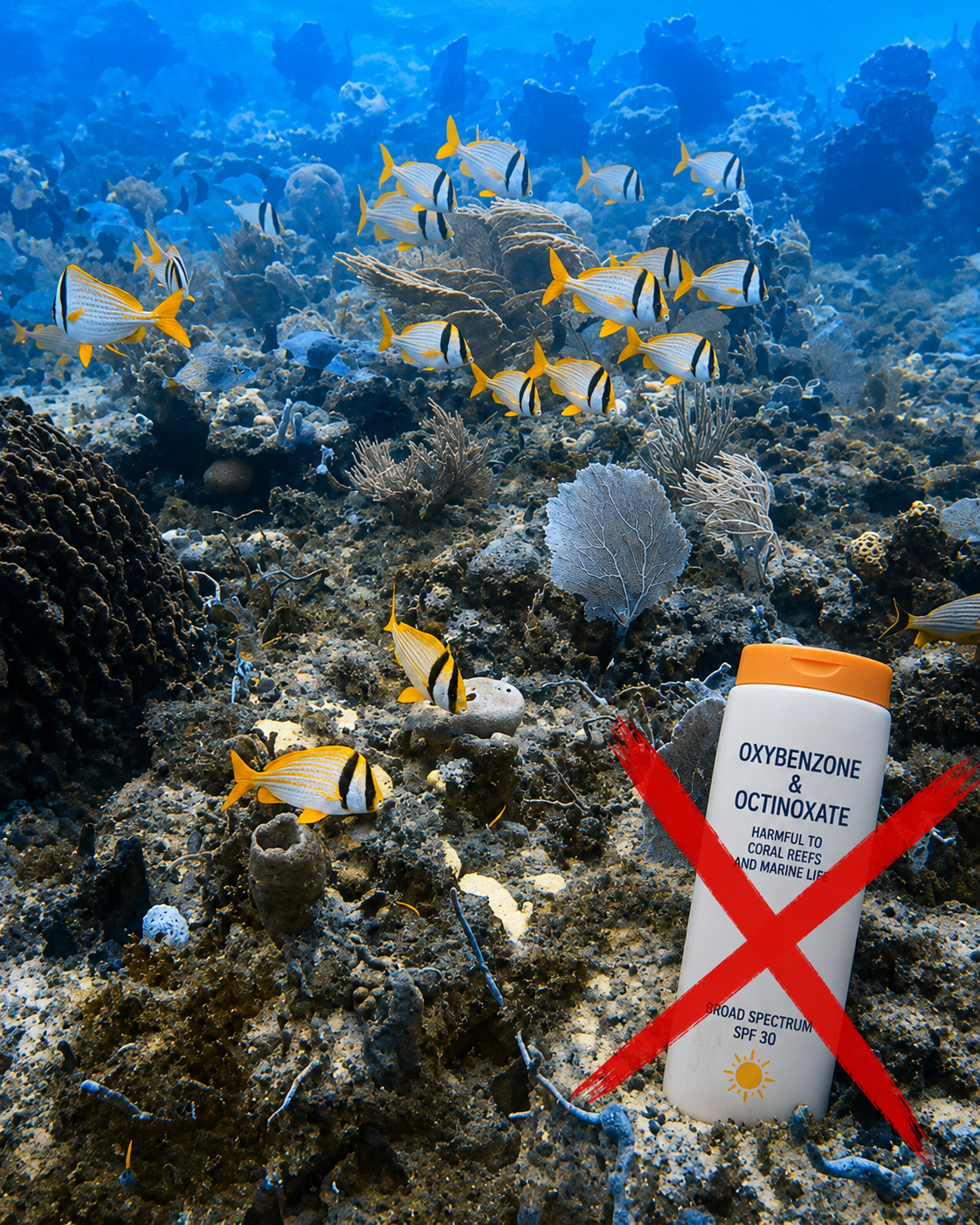
Before you head to the beach, there’s one small step that can make a big difference for the ocean. Your sunscreen.
It’s something we use to protect ourselves—but some ingredients may be doing harm beneath the surface.
What’s the Concern?
When we swim, shower, or even sweat, sunscreen washes off our skin and enters the water. Certain chemical ingredients have been shown to:
- Harm coral reefs
- Disrupt marine life
- Contribute to coral bleaching
- Build up in the tissues of fish and other organisms
Even small amounts can have an impact—especially in heavily visited coastal areas.
Ingredients to Avoid
When choosing a more ocean-friendly sunscreen, try to avoid:
- Oxybenzone (benzophenone-3)
- Octinoxate (ethylhexyl methoxycinnamate)
- Octocrylene
- Homosalate
- Octisalate
- 4-MBC
These are commonly found in many popular sunscreens.
What to Look For Instead
A better choice? Mineral (physical) sunscreens. Look for:
- Non-nano zinc oxide (preferred)
- Titanium dioxide (non-nano)
These sit on top of your skin and reflect UV rays, rather than being absorbed into your body or the water.
What Does “Reef-Safe” Really Mean?
Here’s the tricky part: The term “reef-safe” isn’t regulated. That means products can use the label even if they still contain questionable ingredients. The best approach? Read the label yourself.
Simple Ocean-Friendly Tips
- Apply sunscreen before you get to the beach
- Reapply after swimming—but be mindful of excess
- Wear UPF clothing, hats, and sunglasses
- Seek shade during peak sun hours
Why It Matters
Coral reefs support about 25% of all marine life—and protect our coastlines, too.
Protecting them doesn’t require a huge lifestyle change. Just a better bottle.Choosing a more ocean-friendly sunscreen is one of the easiest ways to protect what you love—every time you step into the sun.

Leave a Reply