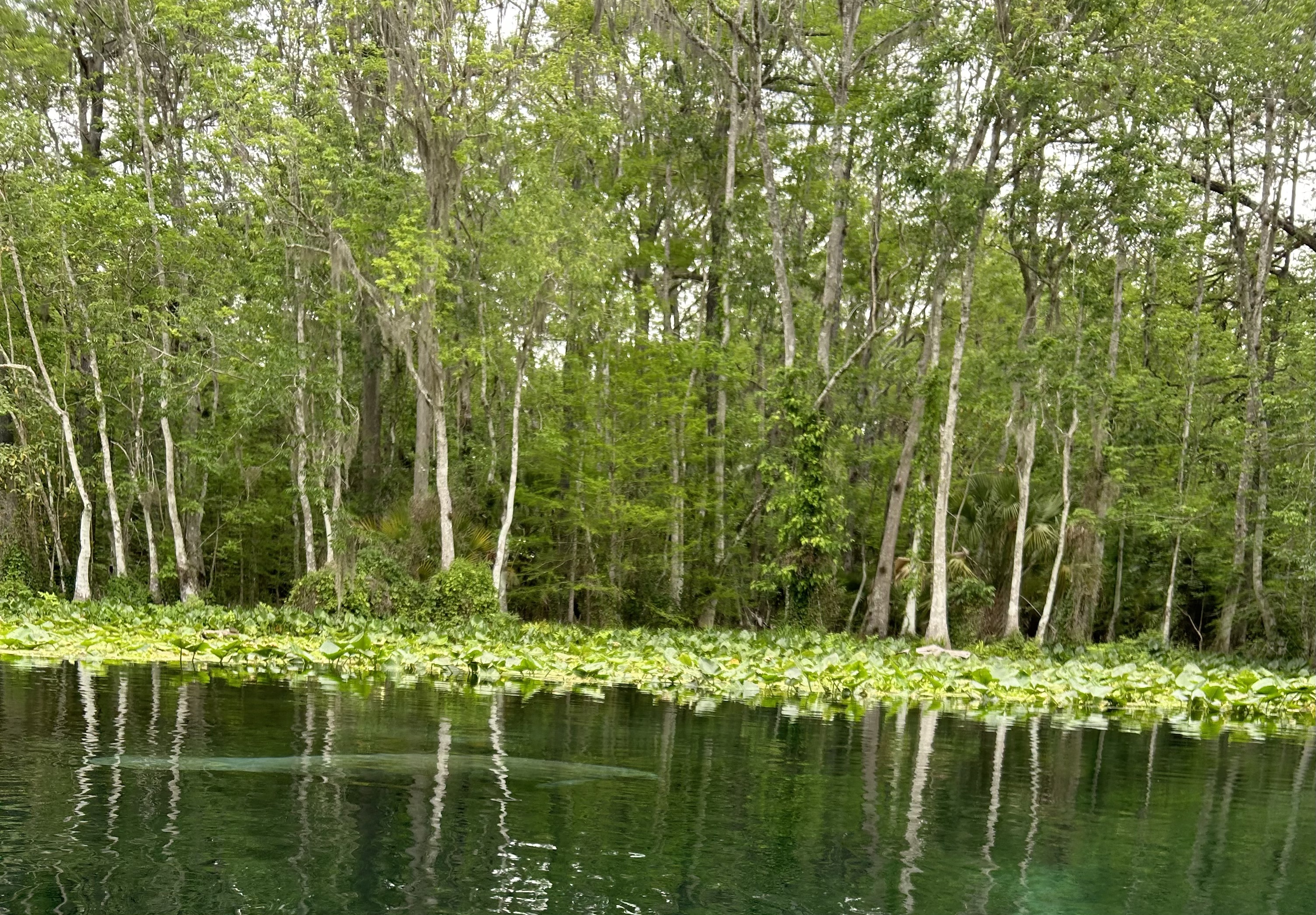

If you’ve ever paddled through a quiet mangrove tunnel or walked along the Indian River Lagoon at low tide, you’ve likely seen them—twisted roots rising from the water like something out of a storybook.
Mangroves may not look glamorous, but they are some of the most powerful protectors in our coastal ecosystems.
What Are Mangroves?
Mangroves are salt-tolerant trees that grow along tropical and subtropical coastlines.
Their tangled root systems create a living barrier between land and sea—and that barrier does more than you might think.
A Hidden Nursery for Marine Life
- Mangroves are bursting with life.
- Manatees rest and feed in sheltered mangrove channels, grazing on nearby seagrass.
- Juvenile fish and crustaceans—including snapper, grouper, shrimp, and blue crabs—use the roots as protection from predators.
- Sea turtles, especially juveniles, forage in nearby seagrass beds connected to mangrove habitats.
- Birds like herons, egrets, pelicans, and ospreys nest and hunt here.
- Invertebrates such as oysters, barnacles, and sponges cling to the roots, filtering water and building mini ecosystems.

These roots are more than structure—they are shelter, safety, and survival.
Nature’s Storm Shield
Mangroves absorb wave energy and reduce erosion, protecting coastlines during storms and hurricanes. Communities with healthy mangrove systems often experience less damage during extreme weather events.
Built-In Water Filtration
Mangroves trap sediment and pollutants before they can reach coral reefs and seagrass beds. Cleaner water means healthier ecosystems—and healthier marine life.

A Climate Superpower
Mangroves store massive amounts of carbon—up to four times more than rainforests.
Protecting them isn’t just about the ocean—it’s about our planet.
What You Can Do
Next time you’re at the beach, keep an eye out for mangrove pods—long, green, pencil- shaped seedlings.
You can:
- Take one home
- Place it upright in a cup of water
- Let it grow roots
Then donate it to a local restoration program or environmental group.


Small actions grow into something bigger—just like mangroves themselves.
Why It Matters
When we protect mangroves, we protect entire ecosystems—from the smallest shellfish to the largest marine mammals.
And ultimately…we protect ourselves.
Leave a Reply